
History tends to repeat itself. After 16 years in SEO, the patterns I'm seeing in the GEO industry feel uncomfortably familiar — and the recovery from a knockout takes far longer than the shortcuts that caused it.
I've been in the SEO industry since the ancient times of 2010. I have witnessed how SEO sites tanked suddenly with Google algorithm updates. If there is something that I'm sure of, it is that unfortunately history tends to repeat itself. Please bear with me for a few minutes.
Let's go back to 2012
In terms of SEO, 2012 was a pivotal year, with Google launching a major algorithm update, Penguin, aimed at backlink issues.
In other words, many SEO strategies worked well, until they didn't.
Penguin was aiming at link schemes. For example, if you wanted to rank for “student loans,” you would simply use the exact same anchor text over and over again. If 100 websites link to your website with the exact anchor text, it must work, right?
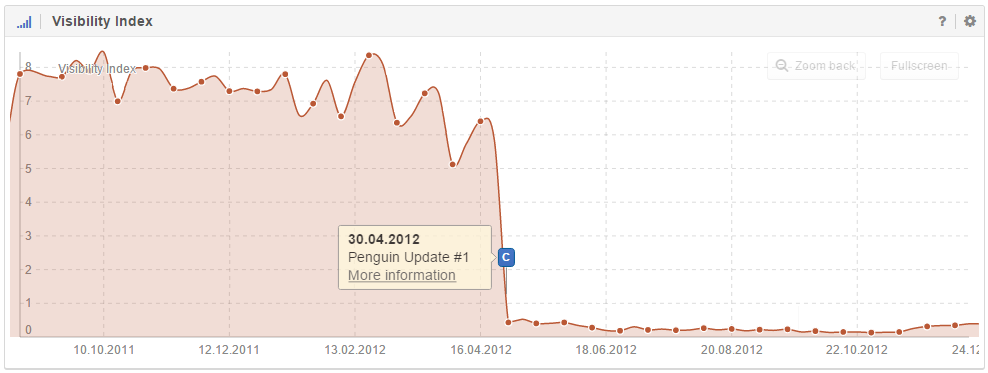
The results were devastating for many business owners. To their credit, many of them didn't know exactly what was happening behind the scenes. They were promised by these snake oil salesmen to boost their ranking, and it worked. It was easy money. Sparkle, some forum comments, add blog posts from PBNs and get all the organic boost that you need.
The hard part was the recovery. This meant that after we had to audit their backlink profiles and disavow many of them for months (using the disavow tool which still exists today), they had to wait for the next Penguin update rollout to recover. In some cases, it took over a year.
Now ask yourself, is it worth the risk?
But these are LLMs, they are completely different, right?
Yes, and no. The way the different LLMs (Google AI Overviews, ChatGPT, Gemini, etc.) choose to mention other websites tends to be different, but there are many similarities as well.
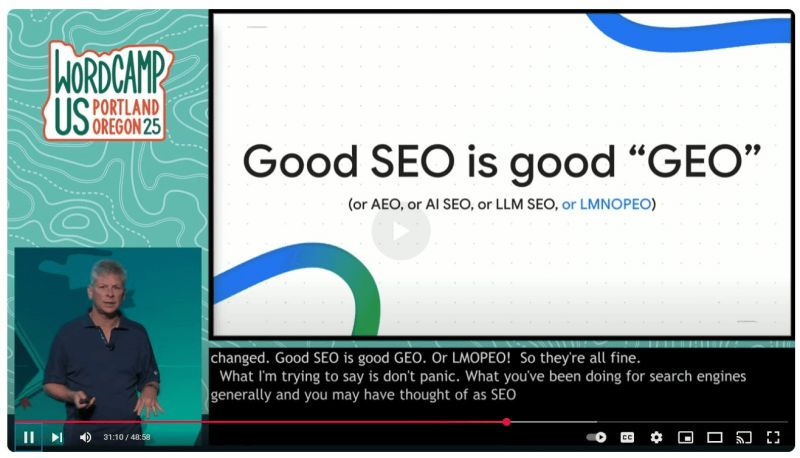
Danny Sullivan from Google said it himself: “Good SEO is good GEO”.
If your entire game plan is to try finding loopholes in the system and take advantage of them, that's probably a game you're about to lose.
Eventually LLMs will keep up with the game, will improve, and spam tactics that had worked in the beginning will stop overnight to help you to rank.
Worse than this, if my experience over the last 16 years has taught me anything, it's that it will cost you a lot to recover from such a knockout.
In this blog post, I'll give you some examples of spammy tactics that are being used by some so-called GEO experts, and why you should be very careful before choosing this as your long-term strategy.
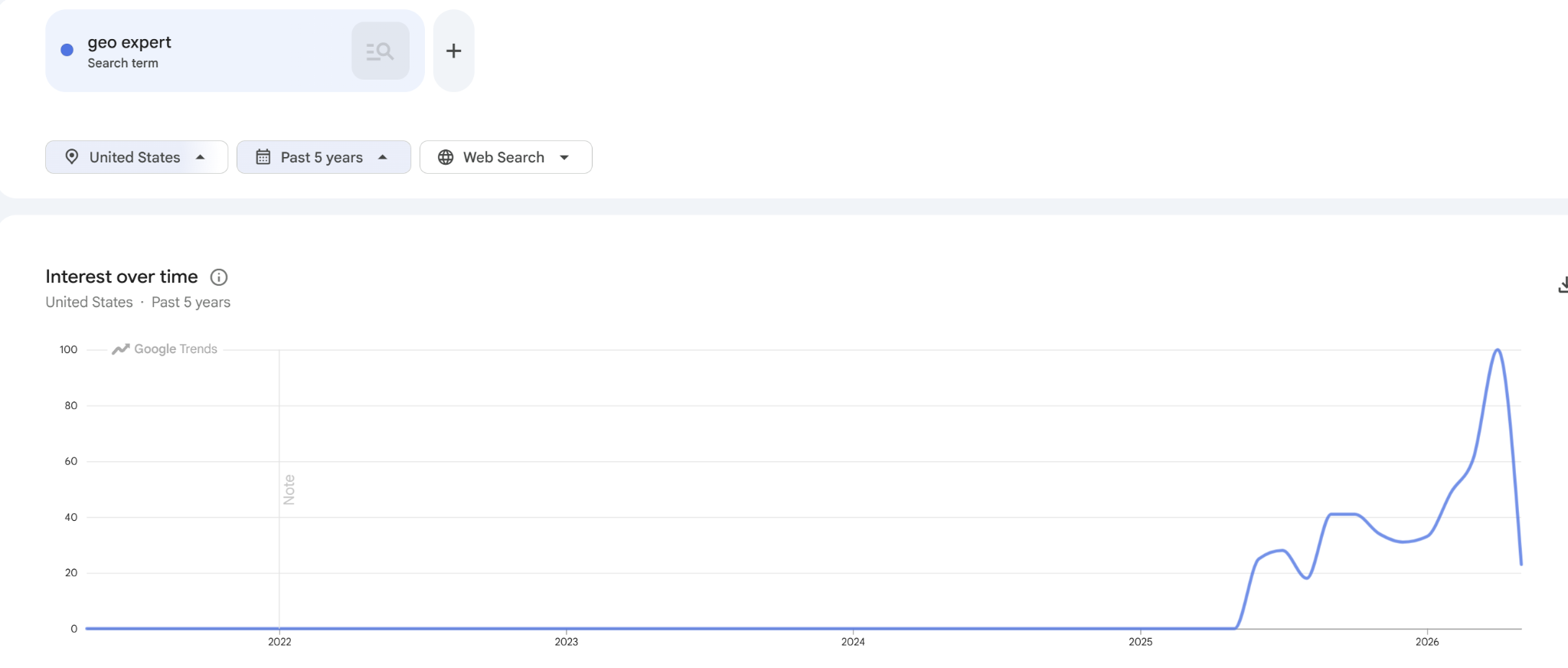
A GEO expert is born overnight
Who are these so-called GEO experts, and how did they become masters of their craft overnight?
When they embellish their contracts with fancy buzzwords such as strategic architecture, narrative enhancements, seeding & amplification — it seems legit and worth the expensive retainer they ask for.
But what do they really offer?
After reviewing many of these proposals, I've noticed that the SEO section is limited to one sentence — something as vague as “Conducting SEO and content marketing.” Wait, what?
What does it even mean?
If I ask for a proposal from a migration lawyer, and he writes in the contract, “conducting migration law for your purposes,” without elaborating on my case at all, I will probably not even bother to call him again.
Just like SEO, GEO shouldn't be voodoo magic. Your expert should be able to explain their strategy and their methodologies. GEO can have great results, even for the long-term, but to conduct proper GEO, you must know at least the basics of SEO.
- You must know how to check if Google and other LLMs are able to index and crawl your website correctly (for example, complexities of single-page application websites).
- You must know how to check if you have broken external backlinks that your brand is missing out on, before even bothering to invest thousands of dollars in new link-building campaigns.
- You must know how to build and manage your site's hierarchy.
Which GEO tactics should you be worried about?
Producing two versions of your content
According to Growth Memo, shorter, focused content wins in ChatGPT. Does this mean you need to split all your content into two versions? Not necessarily — in the long run, doing so can negatively affect both your organic visibility and your AI overviews.
As Danny Sullivan from Google puts it:
One of the things I keep seeing over and over in some of the advice and guidance, and people are trying to figure out what do we do with the LLMs or whatever, is that turn your content into bite-sized chunks, because LLMs like things that are really bite size, right?
So we don't want you to do that. I was talking to some engineers about that. We don't want you to do that. We really don't. We don't want people to have to be crafting anything for Search specifically. That's never been where we've been at and we still continue to be that way. We really don't want you to think you need to be doing that or produce two versions of your content, one for the LLM and one for the net.
Building landing pages outside of the site's hierarchy
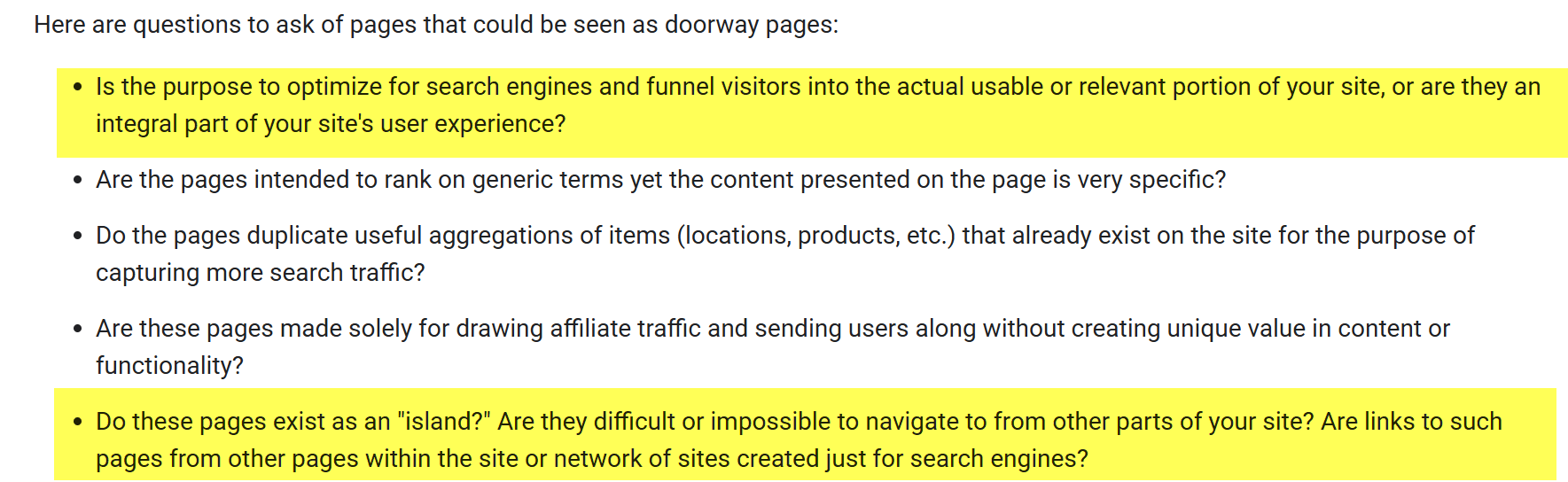
For example, a client mentioned that their GEO provider asked them to build dozens of competitor pages targeting main competitors and alternative queries. These pages were hidden and were not part of the site's hierarchy.
While I understand the reasoning behind building comparison and alternative pages, hiding them on your website is not the best approach.
Google defines these as doorway pages:
If you have a large number of these types of pages indexed without being part of your site's hierarchy, it could potentially harm your rankings in future Google core updates.
Building dozens of fake listings
Recent studies in Generative Engine Optimization (GEO) from institutions like Princeton have already demonstrated that AI visibility can be manipulated by up to 40% simply by flooding the web with specific authority cues.
Unlike Google's sophisticated PageRank, which values the quality of the source, LLMs suffer from what researchers call “Popularity Bias.” They are trained to find the most probable answer, not necessarily the most verified one.
So, why bother? Some might suggest building dozens of fake listings (e.g., “best tools,” “best agencies”) on random websites and social networks to feed the algorithm.
Just like the Google Penguin algorithm I mentioned earlier, this might work in the short term. However, LLMs and Google — which manages Gemini and AI Overviews — are improving exponentially every day. You cannot fake authority and recognition in the long run.
Ask yourself: do you appear in the real listings and articles that actually matter?
The Path Forward: Building for the Long Game
In the 2026 AI gold rush, the greatest risk isn't missing out — it's building on a foundation of sand that will inevitably wash away in the next major algorithm update. If this perspective resonates with you, please share this article. I'd love to hear your thoughts.